 Call
Call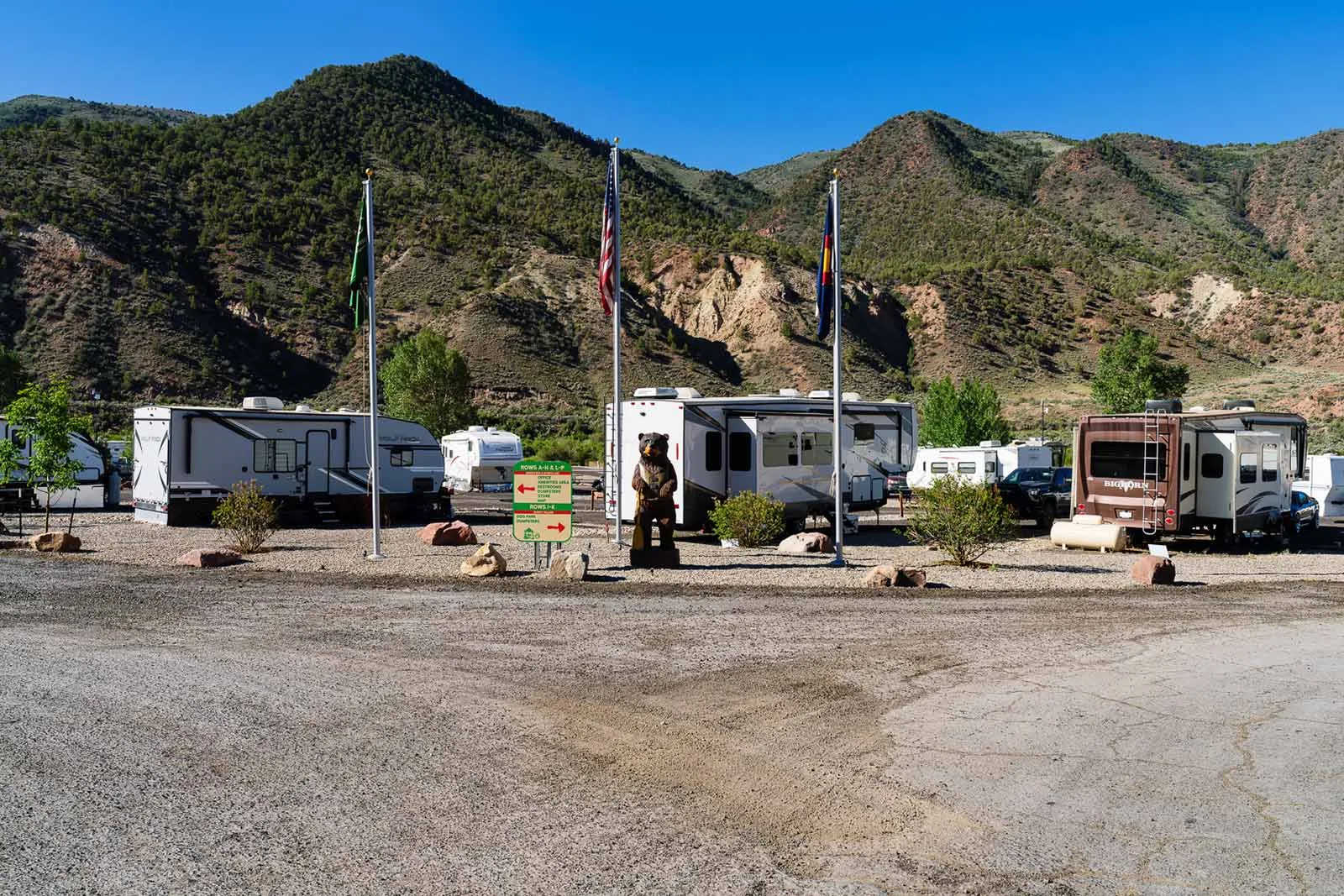
Where to Camp in the Vail Valley: An Honest Look at Every RV Option Near Vail
If you are searching for the best RV parks near Vail Colorado, the first honest thing to say is that Vail itself is not really an RV town. It is a walkable ski resort village built around pedestrians, parking structures, and tight mountain roads. That does not mean you cannot bring your rig to the Vail Valley. It just means the good options tend to sit a little west of the resort, down in the wider part of the valley where there is room to park, level a pad, and hook up to full services.
This guide walks through every real category of place to camp near Vail, with the honest pros and cons of each. The goal is not to talk you into one spot. It is to help you match where you stay to your rig size, the hookups you need, the season you are traveling in, and your budget. By the end you will have a clear sense of why a central full-hookup base down-valley works for most travelers, and when a different option makes more sense for you.
First, a Reality Check on Camping “In Vail”
People picture pulling their motorhome into Vail Village and walking to the gondola. In practice, that is hard to do. Vail Village and Lionshead are designed around parking garages and short-term car parking, not overnight RV stays. There is no sprawling RV park sitting in the middle of town.
Can you camp right in Vail Village?
Not really. There are no full-hookup RV parks inside Vail Village or Lionshead, and overnight RV parking in town is limited and not designed for hookups. Most travelers who want to be near Vail end up staying down-valley in towns like Eagle, Gypsum, Avon, and Edwards, or in public campgrounds in the surrounding national forest.
That is the honest starting point. Once you accept that “near Vail” almost always means a short drive rather than a walk, your options open up in a good way. A base 30 to 35 minutes west puts you close to skiing, hiking, and the river without the stress of squeezing a big rig through a resort village. If you want a deeper look at the town-specific picture, this overview of RV parks in Vail, Colorado covers what is and is not available closer in.
The Four Real Categories of Places to Camp Near Vail
When you clear away the marketing, camping near Vail comes down to four honest categories. Each one fits a different kind of traveler.
1. Private Full-Hookup RV Resorts Down-Valley
These are the developed parks in the wider part of the valley, mostly around Eagle and Gypsum. They offer full hookups, which means 30 and 50 amp electric, water, and sewer at your site, plus amenities like Wi-Fi, hot showers, clean bathrooms, and laundry.
Pros. You get flat, stable pads and reliable services, so you are not rationing water or hunting for a dump station. You can run your air conditioning or heat, keep devices charged, and shower without thinking about it. You are also centrally located, usually within a reasonable drive of Vail, Beaver Creek, Eagle, Avon, and Edwards. For families, remote workers, longer stays, and bigger rigs, this is the most comfortable and predictable choice.
Cons. You will pay more per night than a primitive public campground, and you are not parked deep in the woods. You trade a little wilderness feel for convenience, services, and an easy commute to town.
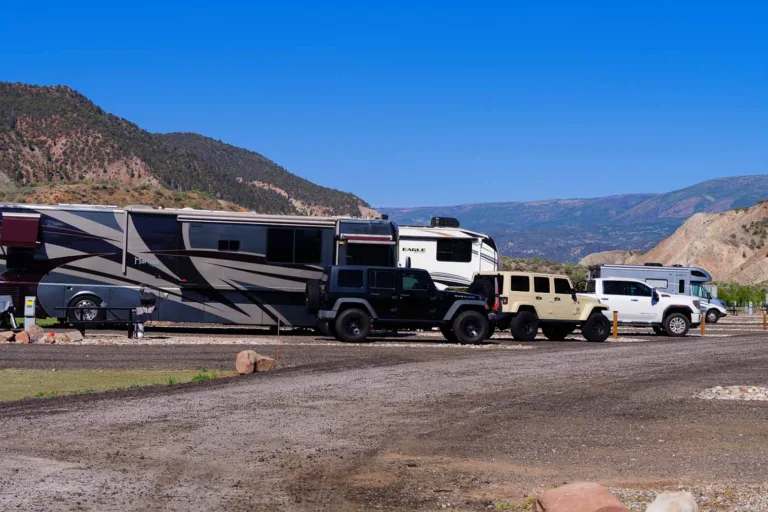
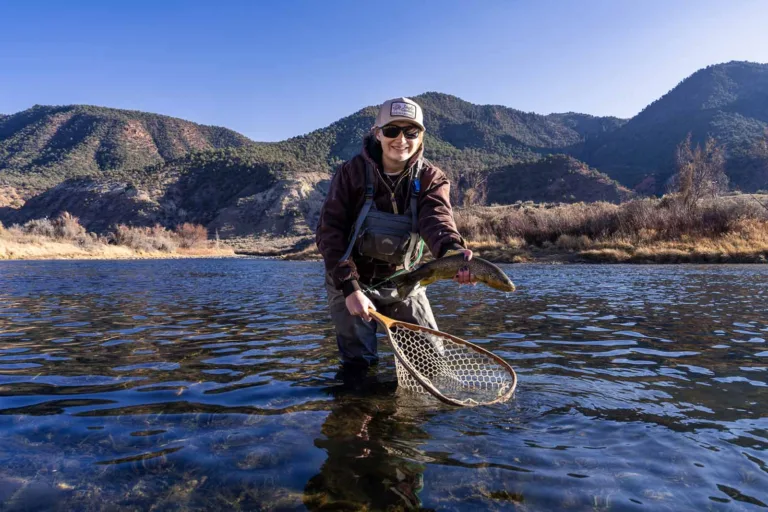
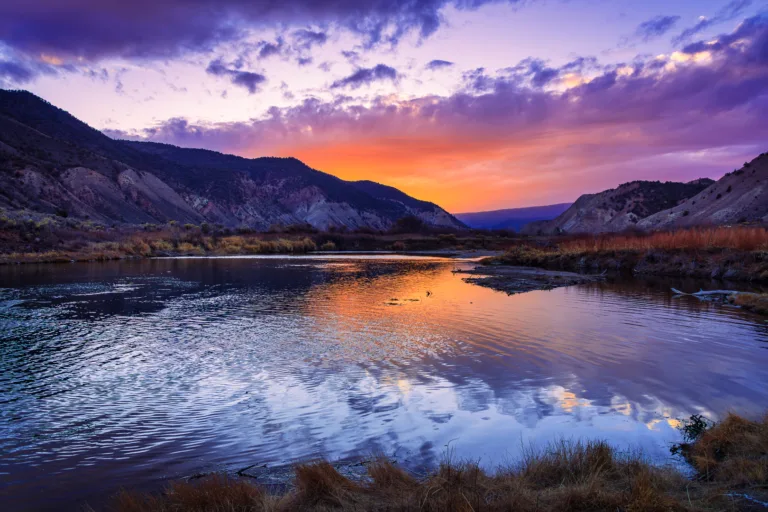
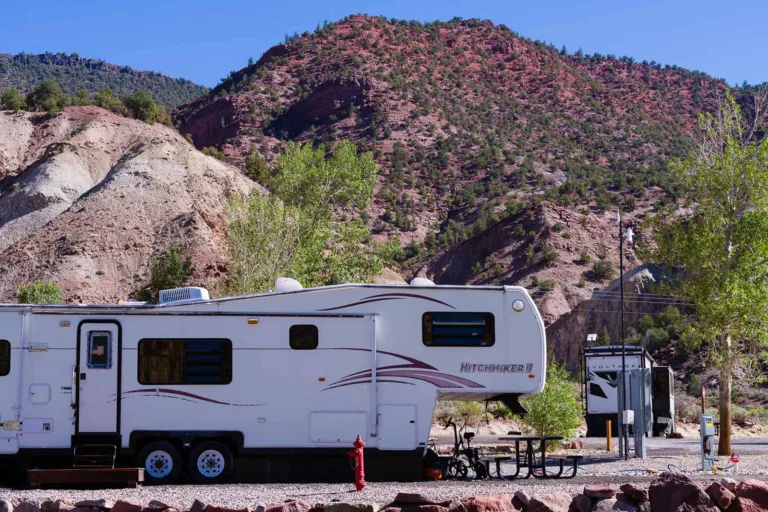
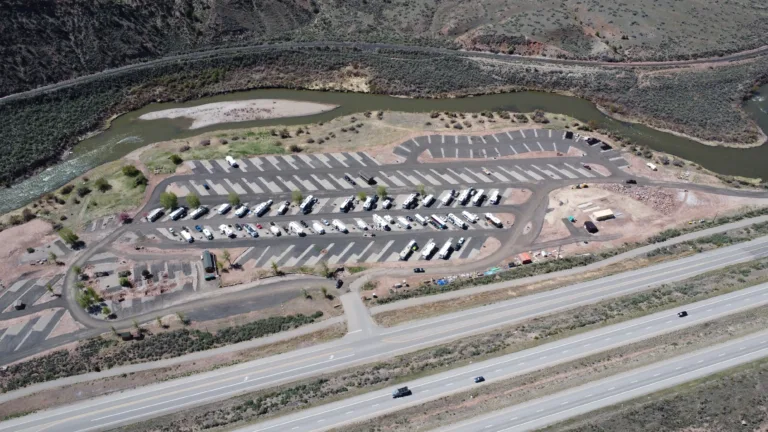
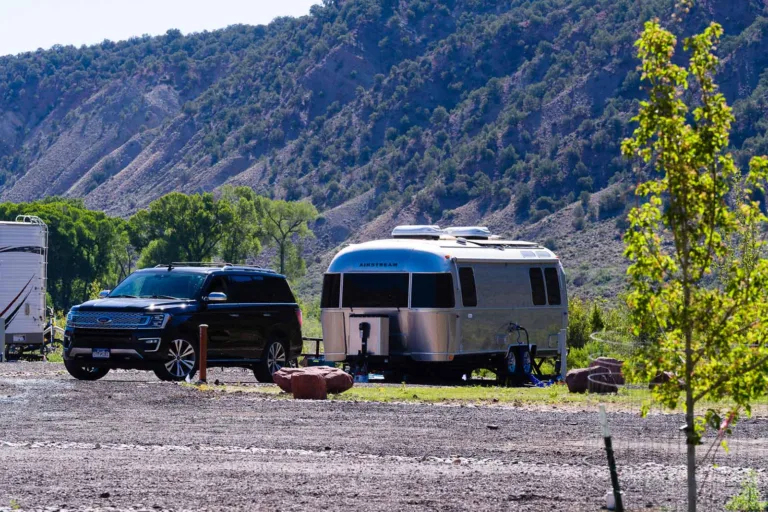
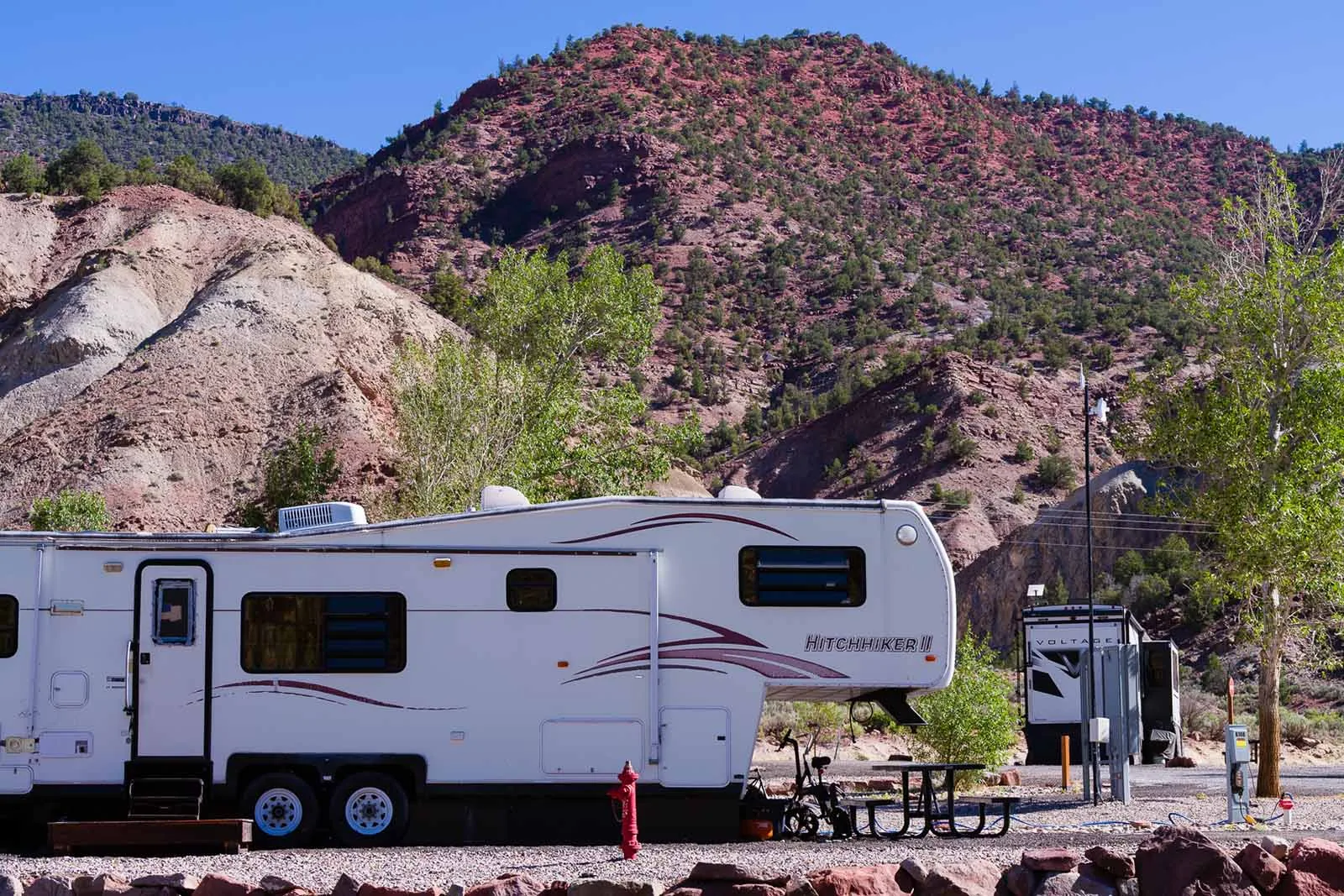
This is the category Riverdance RV Resort in Gypsum falls into. You get full hookup sites, flat pads, Wi-Fi, hot showers, coin laundry, a pet friendly setup, picnic tables, and private access to the Eagle River, all at about 6,300 feet right off I-70.
2. Public and National Forest Campgrounds
The White River National Forest surrounds the Vail Valley, and there are Forest Service and other public campgrounds tucked into the mountains around it. These range from developed sites with vault toilets to very basic spots.
Pros. The scenery is hard to beat, and the price is usually low. If your idea of a trip is waking up under tall pines with a creek nearby, this is the honest heart of it. Some sites can fit smaller motorhomes and trailers.
Cons. Hookups are limited or nonexistent, so most public campgrounds mean dry camping. Many have length limits that rule out bigger rigs, and access roads can be narrow, steep, or unpaved. High country campgrounds are seasonal and often closed or snowed in outside the warmer months. Popular ones book out early for summer weekends, and cell service can be spotty, which matters if you need to work or stay reachable.
3. Dispersed Camping and Boondocking
On much of the surrounding national forest land you can camp for free outside of developed campgrounds, which is called dispersed camping or boondocking. You find a legal, already-used pullout or clearing and you are fully self-contained.
Pros. It is free, quiet, and about as close to the land as you can get. For experienced, self-sufficient campers with the right gear, it is a wonderful way to experience the high country.
Cons. There are no hookups, no water, no dump stations, and no bathrooms. You carry in everything and pack out everything, including waste. Roads to dispersed sites are often rough and not built for large or low-clearance rigs. Rules, stay limits, and seasonal or fire-related closures change, so you have to check current conditions before you go. This is not a good fit for big rigs, first-timers, or anyone who needs reliable power and water.
Is boondocking near Vail a good idea for a large RV?
For most large rigs, no. Dispersed sites tend to sit down narrow forest roads with tight turns and no services, which is a hard match for a long fifth wheel or Class A. Large rigs are generally happier at a full-hookup park with room to maneuver.
4. In-Town Vail Parking and Short Stops
Finally, there is the reality of just needing a place to leave a rig for a bit while you visit town. Vail relies on parking structures and managed lots, and these are not set up for overnight RV camping or hookups.
Pros. It can work for a quick daytime visit if you can find a spot that fits your vehicle.
Cons. It is not a camping solution. There are no services, overnight rules are strict, and big rigs often do not fit. Plan to camp somewhere with real sites and drive in for the day.
Why a Central Full-Hookup Base Works for Most Travelers
Once you lay the four categories side by side, a pattern shows up. Public campgrounds and dispersed sites are beautiful but limited by season, rig size, and lack of services. In-town parking is not camping. That leaves a central full-hookup base as the option that fits the widest range of travelers, and it is worth being honest about why.
Location. Gypsum sits right on I-70 in the wider, lower part of the valley. From a base here you are roughly 30 to 35 minutes west of Vail and about 30 minutes east of Glenwood Springs, with Eagle, Avon, Edwards, and Beaver Creek all close by. You can ski or sightsee in one direction and reach hot springs and canyons in the other, all from the same pad.
Elevation and comfort. At about 6,300 feet, Gypsum sits lower than the high mountain passes and much of the surrounding forest. That often means milder overnight temperatures and a longer usable season than a high country campground that closes with the first heavy snow.
Services that hold up. Full hookups, Wi-Fi, hot showers, clean bathrooms, and coin laundry are not luxuries when you are staying more than a night or two. They are what let you actually live in your rig, work remotely, travel with kids, or settle in for a season without constantly managing tanks and power.
Room for your rig. Flat, stable pads and proper sites mean you are not white-knuckling a narrow forest road or trying to level on a slope. If you want the specifics on what that looks like locally, here is more on full hookup RV sites in Gypsum, Colorado.
Is Gypsum a good base for visiting Vail and Beaver Creek?
Yes, for most travelers it is. You get full services and an easy drive to the resorts without paying resort-village prices or fighting for space in town. You can day-trip to Vail or Beaver Creek and come home to a hookup and a hot shower.
How to Choose Based on Your Trip
The right option really does depend on your situation. Here is an honest way to sort it.
By Rig Size
Big rigs, long fifth wheels, and large motorhomes are almost always better off at a full-hookup park with flat pads and room to turn. Small trailers, vans, and truck campers have more freedom to try public campgrounds or dispersed sites, since they fit tighter spaces and rougher roads.
By Hookups Needed
If you rely on steady power for medical equipment, remote work, air conditioning, or heat, book full hookups and do not gamble on it. If you are truly self-contained with solar, batteries, and fresh and gray water capacity, dry camping opens up. Most people fall in the middle and are happiest with hookups available.
By Season
Summer is the widest-open season, and it is also when the best public campgrounds fill fastest, so book early. Shoulder seasons and winter shrink your choices sharply, because high country campgrounds close and forest roads get snow. A lower-elevation full-hookup park is far more likely to be open and comfortable in the cold months, which matters for ski trips and extended stays.
By Budget
Dispersed camping is free, public campgrounds are cheap, and private full-hookup resorts cost more because you are paying for services and location. Be honest about the trade. If saving money means a long rough drive, no water, and a spotty forecast, weigh that against the convenience and reliability of a full-hookup site. For rates and current availability at a central base, check the booking page linked at the end rather than guessing at a number.
A Quick Word on the Nearby Towns
“Near Vail” spreads across several down-valley towns, and each has its own feel. Avon sits right at the base of Beaver Creek, so if that mountain is your focus, staying central and driving in is easy. Edwards is a comfortable, spread-out community with everyday services close at hand. All of them are within reach of a Gypsum base, which is part of why a central location works so well. If you want to compare the areas, here are closer looks at RV parks in Avon, Colorado, RV parks near Beaver Creek, CO, and RV parks in Edwards, CO.
The theme across all of them is the same. There is very little true in-town RV camping at the resorts, and the practical, comfortable stays are down-valley where there is room and full services.
Frequently Asked Questions
The Bottom Line
There is no single best way to camp near Vail. There is only the option that fits your rig, your need for hookups, your season, and your budget. Public campgrounds and dispersed sites reward self-sufficient campers with smaller rigs and flexible timing. In-town Vail is for day visits, not overnight stays. And for most travelers, a central full-hookup base down-valley is the choice that balances comfort, location, and reliability without asking you to give up your trip to town.
If that base sounds like what you want, Riverdance RV Resort in Gypsum puts full hookups, flat pads, hot showers, laundry, a pet friendly setup, and private Eagle River access within an easy drive of Vail and Beaver Creek. When you are ready to lock in your dates, book your stay on Campspot and check current rates and availability. Come see how easy the Vail Valley feels when your home base is set up right.