 Call
CallFull Hookup RV Sites Near Vail: What 30-Amp, 50-Amp, Sewer, and Dump Stations Actually Include
Planning an RV trip through the Vail Valley is exciting, and part of the planning is knowing what your campsite will actually give you. Words like “full hookup,” “30-amp,” “50-amp,” and “dump station” get used a lot, and they are not always explained clearly. If you have ever pulled into a site and found the power or the sewer was not what you expected, you know how much this matters.
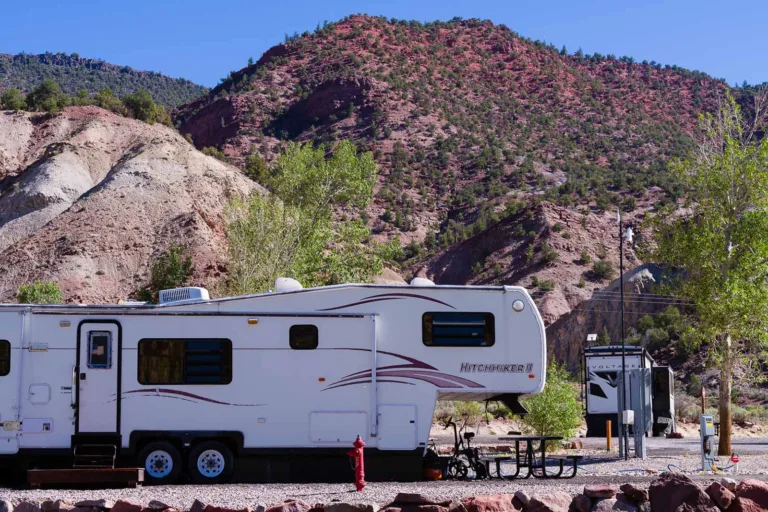
This guide walks you through what these terms mean, how the electrical, water, and sewer connections work, and what to confirm before you book. Along the way you will see how the full hookup RV sites in Gypsum, Colorado at Riverdance RV Resort fit into the picture, since every site here includes 30 and 50 amp power, water, and sewer.
What “Full Hookup” Actually Means
A full hookup site gives you three utility connections right at your pad: electric, water, and sewer. That is the whole idea. Instead of running your generator, hauling fresh water, or driving to a communal dump station, you connect once when you arrive and stay connected the whole time.
Some parks advertise “hookups” but only offer electric and water, which means you still have to break camp and drive to a dump station to empty your tanks. Full hookup removes that step. At Riverdance, every site is full hookup with 30 and 50 amp power, potable water, and a sewer connection, so you are not guessing which sites have what.
What is the difference between full hookup and partial hookup?
A full hookup site has electric, water, and sewer all at the pad. A partial hookup usually has electric and water only, so you empty your holding tanks at a shared dump station instead of at your site. Full hookup lets you stay put and empty gray and black tanks whenever you need to.
30-Amp vs 50-Amp Power: The Real Difference
This is where most of the confusion happens, so it is worth getting right. The number of amps tells you how much electrical power your rig can draw, and the two are not just bigger and smaller versions of the same thing. They are wired differently.
30-Amp Service
A 30-amp connection is a single 120-volt line on a three-prong plug. One hot wire, one neutral, one ground. At 120 volts and 30 amps, that gives you around 3,600 watts of power to work with.
That is plenty for smaller and mid-size rigs, travel trailers, and many older motorhomes. It comfortably runs one air conditioner, a fridge, lights, a microwave, and the usual gear, as long as you are mindful about running several heavy appliances at the exact same moment.
50-Amp Service
A 50-amp connection is a different animal. It uses a four-prong plug with two separate 120-volt hot legs, a neutral, and a ground. Because you have two hot legs, it can supply 120 volts for regular outlets and 240 volts for larger equipment. At 50 amps across those two legs, you get roughly 12,000 watts.
That much larger capacity is why big fifth wheels and Class A motorhomes use 50-amp. They often run two or even three air conditioners, a residential fridge, a washer and dryer, and more, all at once. A 50-amp rig on a 30-amp connection has to ration power carefully.
Do I need a 50-amp site or will 30-amp work?
Check the plug on your rig. If your shore power cord ends in a four-prong plug, your RV is set up for 50-amp and you will get the most out of a 50-amp site. If it is a three-prong plug, you are a 30-amp rig. Riverdance sites offer both 30 and 50 amp, so either type of rig is covered.
Adapters and Surge Protectors
You can bridge the two with an adapter, sometimes called a dogbone. A 50-amp rig can plug into a 30-amp outlet with an adapter, but it only receives 30-amp power, so you cannot run everything at once. A 30-amp rig can plug into a 50-amp outlet with the opposite adapter and simply draws what it needs.
One piece of gear is worth buying before your trip: a surge protector or an electrical management system. It plugs in between the pedestal and your cord, and it protects your rig from voltage spikes, low voltage, and miswired pedestals. At elevation and during summer storms in the mountains, that protection is cheap insurance for expensive electronics.
Water Hookups: Potable Water and Pressure
The water connection at a full hookup site is a potable water spigot, meaning the water is safe to drink and cook with. You connect it to your RV with a drinking-water-safe hose, which is the white or blue kind rated for potable use, not a regular garden hose.
Here is the part many people skip. You should always use a water pressure regulator between the spigot and your hose. Campground water pressure can run higher than your RV plumbing is built for, and a sudden surge can burst a line or blow a fitting inside your rig. A small brass regulator screws on in seconds and keeps the incoming pressure at a safe level. A short trip to fix a flooded RV is nobody’s idea of a vacation.
With a full hookup water connection, you have constant fresh water, so you are not depending on your onboard tank and pump for a multi-day stay.
Do I need my own drinking water hose and pressure regulator?
Yes, bring both. Use a hose labeled for potable or drinking water, and add a pressure regulator at the spigot to protect your plumbing. These are inexpensive, easy to find, and they belong in every RV kit.
Sewer Hookup vs Dump Station
Your RV holds waste in two tanks. The gray tank collects water from your sinks and shower. The black tank collects waste from the toilet. Both eventually need to be emptied, and how you do that is the difference between a sewer hookup and a dump station.
Sewer Hookup at the Site
A full hookup site has a sewer connection right at your pad. You attach your sewer hose to your RV outlet and drop the other end into the site’s sewer inlet, usually with a fitting that seals the connection. Good practice is to keep the black tank valve closed until the tank is fairly full, then dump it so the volume of water carries the solids out cleanly. The gray tank can be dumped after, which helps rinse the hose. Having sewer at the site means you empty on your own schedule without moving the rig.
Dump Station
A dump station is a shared spot in the park, or at a highway rest area, where you drive your rig up and empty your tanks into a single sewer inlet. Parks without site sewer connections rely on these. They work fine, but they mean packing up, driving over, and waiting your turn, especially on busy checkout mornings.
Because every Riverdance site is full hookup, you have sewer at your pad and do not have to plan your days around a dump station.
What is the difference between a sewer hookup and a dump station?
A sewer hookup is at your individual site, so you empty your tanks anytime without moving. A dump station is a shared location you drive to. Full hookup sites give you the sewer connection at the pad, which is more convenient for longer stays.
What to Confirm Before You Book
A few quick checks save you headaches when you arrive:
- Amp service. Confirm the site offers the amperage your rig needs, 30 or 50. Riverdance sites include both.
- Full hookup vs partial. Make sure water and sewer are at the site, not just electric.
- Pad type. Ask whether pads are level and stable. Riverdance has flat, stable pads, which makes leveling and setup much easier.
- Rig length and slides. Confirm the site fits your length and that your slides and awning have room.
- Amenities. Check for the things that make a stay comfortable, such as Wi-Fi, hot showers, clean bathrooms, and coin laundry, all of which Riverdance provides.
- Pet policy and park rules. If you travel with pets, confirm the park is pet friendly and read the guidelines. You can review the park rules before you arrive.
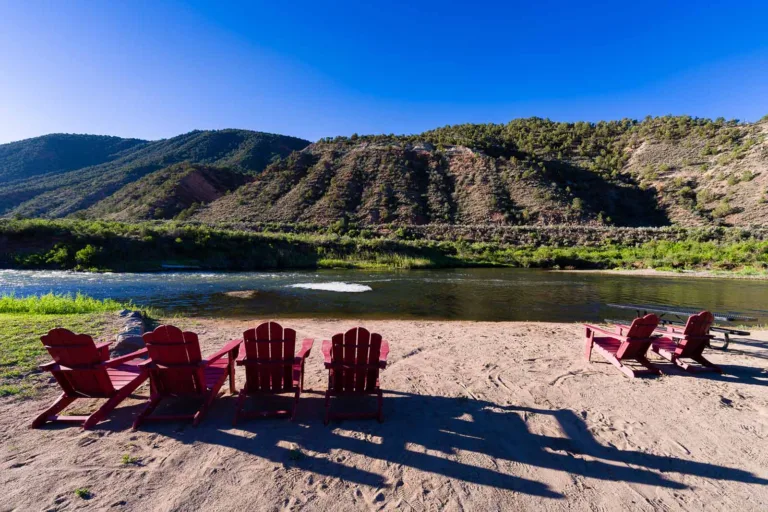
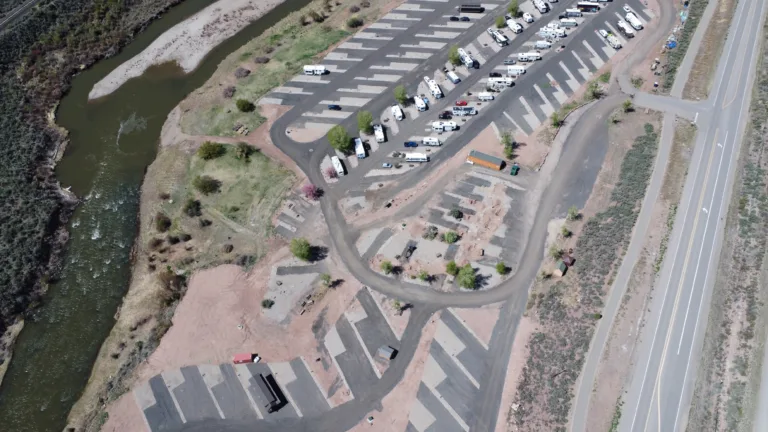
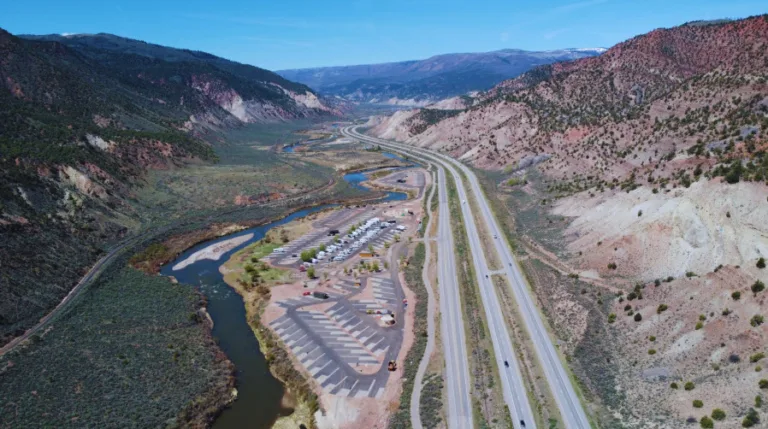
It also helps to look at the site layout so you can picture where you will be. The Riverdance park map shows how the sites are arranged along the property and its private Eagle River access.
Why Full Hookups Matter More at Elevation
Gypsum sits at about 6,300 feet along I-70, roughly 30 to 35 minutes from Vail and central to the whole Eagle Valley. Mountain weather swings from warm afternoons to cool nights, and that is exactly when reliable full hookups earn their keep. Steady power runs your heat or air conditioning, constant water means you are not rationing your tank after a long day of hiking or skiing, and site sewer means you settle in and stay put.
Riverdance is built around longer, comfortable stays as well as overnight stops. Beyond standard full hookup RV sites, there are monthly park model lots, the Park and Porch tiny home village, and long-term stay options for people who want to base themselves in the Vail Valley for a season.
Frequently Asked Questions
Ready to Book Your Vail Valley Stay
Understanding your hookups takes the guesswork out of RV travel. Know your amp service, bring a pressure regulator and a proper water hose, keep a surge protector on hand, and choose a full hookup site so power, water, and sewer are all waiting at your pad. Riverdance RV Resort gives you all of that on flat, stable sites with private Eagle River access, just minutes from Vail.
When you are ready, reserve your site on Campspot and get set for an easy, comfortable stay in the heart of the Eagle Valley.